Protection That Extends Your Roof's Service Life
Residential Roof Coatings in Orange for aging roofs that remain structurally sound but show surface weathering
Roof coating systems provide an alternative to full replacement when the underlying structure and decking remain intact but surface materials have begun to degrade from UV exposure and thermal cycling. Weatherline ReRoofing & Repairs applies reflective coatings that create a waterproof membrane over existing roofing, sealing minor cracks and protecting against further deterioration. You see this service used on flat or low-slope residential roofs where traditional shingle replacement doesn't apply, and on aged asphalt or tile systems where the homeowner wants to delay replacement costs while maintaining weatherproof integrity.
The coating process involves cleaning the existing roof surface to remove debris and loose material, repairing any significant damage or open seams, and applying multiple layers of elastomeric coating that bonds to the substrate. Orange County's intense summer sun accelerates roof aging through UV breakdown of asphalt and sealants, making reflective coatings particularly effective at reducing heat absorption that contributes to material degradation. These systems also improve energy efficiency by lowering attic temperatures, which reduces cooling loads during the extended warm season.
Request an assessment to determine whether your roof's current condition makes it a suitable candidate for coating rather than replacement.
How Coating Systems Restore Weatherproofing
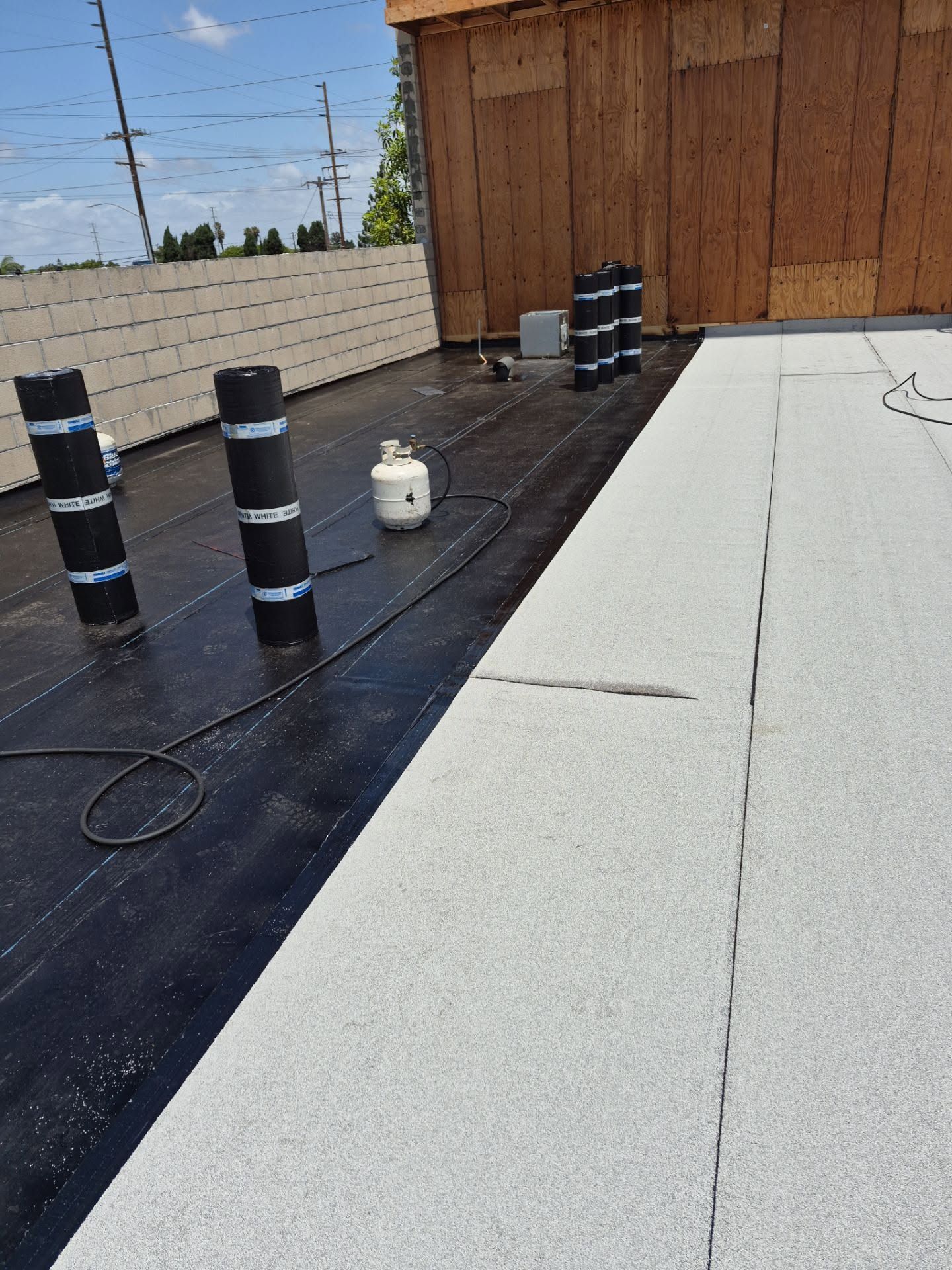
Application begins with surface preparation that removes dirt, algae, and any flaking material that would prevent proper adhesion. Cracks and gaps get filled with compatible sealant before the base coat goes down, ensuring that the membrane doesn't bridge over voids that would later flex and split. The coating itself is a liquid-applied material that cures into a continuous, flexible barrier without seams or fastener penetrations that create potential leak points.
After coating application, your roof reflects more sunlight instead of absorbing it, which keeps surface temperatures lower and reduces the expansion-contraction cycles that stress aging materials. Water beads off the coated surface rather than soaking into porous areas where freeze-thaw damage or rot can develop. The membrane remains flexible as the roof structure shifts slightly with temperature changes, unlike rigid materials that crack under stress. You'll notice that attic spaces stay cooler during summer months and that minor leaks that were developing at worn spots no longer allow moisture through.
Coating systems work best on roofs where the substrate hasn't failed—if the decking is rotted or if large sections of material are missing, coating won't address the underlying structural problem. The service extends roof life by years when applied to surfaces that have aged cosmetically but remain functionally sound underneath the weathered exterior layer.
Questions About Roof Coating Applications
Homeowners considering coating systems often want to understand how this approach compares to replacement and what performance they can expect.
What types of roofs can be coated?
Flat roofs, low-slope systems, and some tile or asphalt installations accept coating applications, provided the surface is clean, intact, and free from widespread structural damage that requires replacement rather than surface treatment.
How long do roof coatings last?
Properly applied coatings typically extend roof life by ten to fifteen years depending on climate exposure and maintenance, with periodic recoating being possible if the original substrate remains sound beneath the membrane.
What's the difference between coating and replacing a roof?
Coating restores weatherproofing and adds protective layers to an existing system, while replacement removes everything down to the deck and builds up an entirely new structure—coating costs significantly less but only works when the underlying roof hasn't failed.
Do coatings actually reduce cooling costs in Orange?
Reflective coatings lower roof surface temperatures by up to fifty degrees compared to dark, heat-absorbing materials, which reduces heat transfer into attic spaces and lessens the load on air conditioning systems during the area's long, hot summers.
What maintenance do coated roofs require?
Coated roofs need periodic cleaning to remove debris that holds moisture against the surface and occasional inspection to catch small punctures or worn areas before they develop into leaks that compromise the membrane's integrity.
Weatherline ReRoofing & Repairs evaluates roof condition to determine whether coating provides adequate protection or whether structural issues require more extensive work. Set up an inspection to review your roof's current state and discuss whether a coating system fits your situation and budget.