Waterproof Systems for Low-Slope Applications
Flat Roofing in Orange for residential and low-slope roofing systems requiring reliable drainage and membrane integrity
Low-slope roofing systems depend on waterproof membranes and properly engineered drainage since water doesn't shed through gravity alone the way it does on steep-pitch roofs. Homeowners with flat roof sections over additions, garages, or modern architectural designs notice ponding water or interior stains when membrane seams fail or when drain outlets become clogged with debris. Weatherline ReRoofing & Repairs installs and repairs flat roofing systems across Orange, addressing everything from complete membrane replacements to localized repairs that extend system life between major renovations.
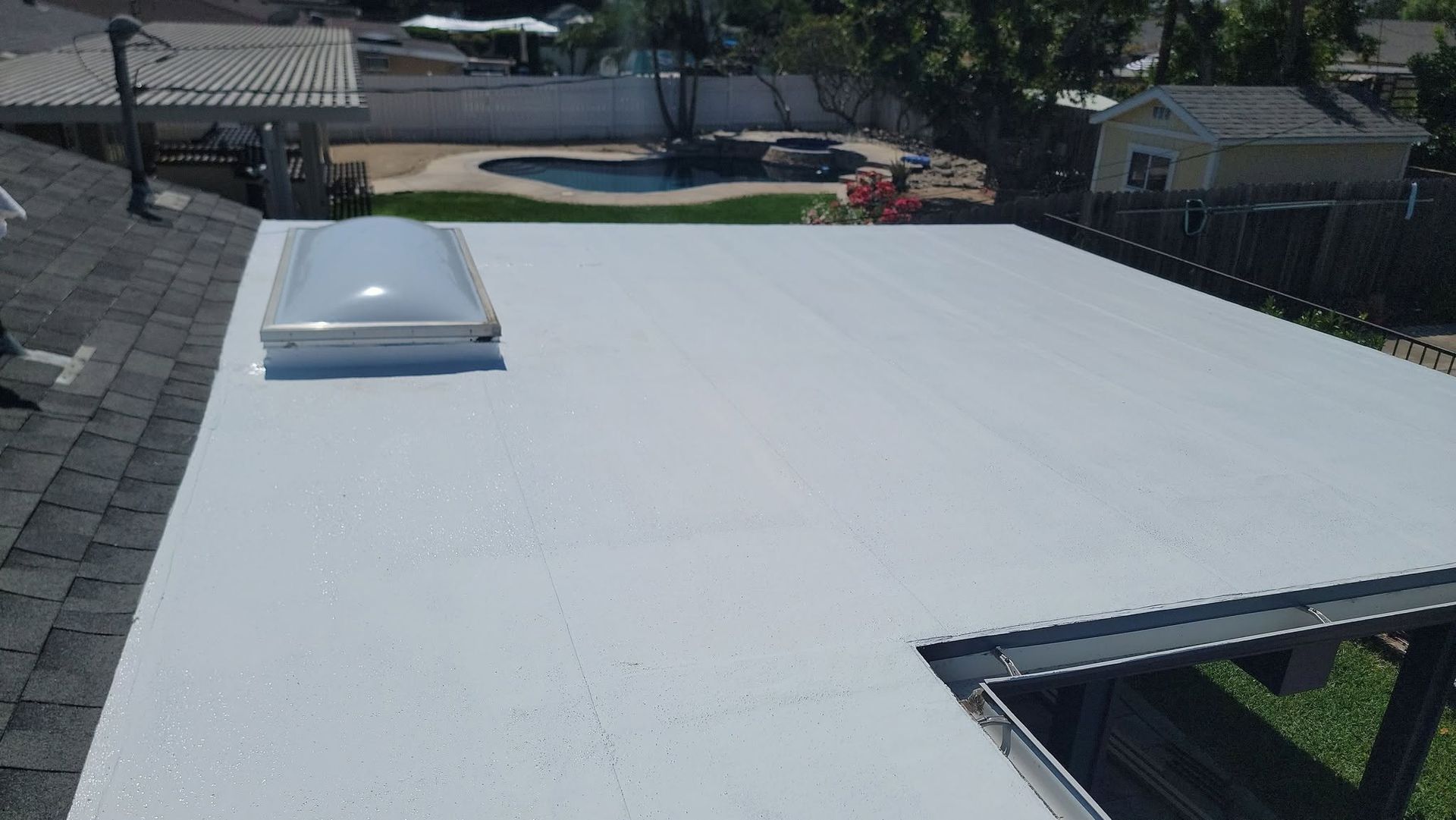
Flat roof installation involves preparing the substrate to ensure proper slope toward drainage points, applying underlayment or insulation layers depending on the system type, then installing the waterproof membrane using methods appropriate for the climate and building use. Roof coatings for flat roofs provide an additional layer of protection that reflects UV radiation and seals minor imperfections in the membrane surface, which extends the interval before complete replacement becomes necessary. The systems must handle foot traffic for maintenance access and accommodate thermal expansion that occurs as roof surfaces heat and cool through daily cycles.
Schedule a flat roof assessment to identify drainage issues and discuss coating or replacement options for your specific system type.
What Flat Roofing Installation Actually Accomplishes
Flat roofing systems create a continuous waterproof barrier across surfaces that lack the pitch needed for traditional shingle applications, with seams that overlap and seal to prevent water migration even when the roof surface holds standing water temporarily. Installation quality shows up in how quickly water drains after rain events and whether the membrane remains bonded to the substrate without bubbling or lifting at edges. Proper systems include tapered insulation or structural slope that prevents water from pooling in the same locations repeatedly, which accelerates membrane deterioration and increases leak risk.
Once installation finishes, you'll see a uniform surface without wrinkles or fish mouths at seams, sealed penetrations where vents and equipment pass through the membrane, and functional drains that clear water within hours of rain stopping. The roof handles foot traffic without puncturing, and the coating surface resists UV breakdown that causes unprotected membranes to become brittle and crack. Weatherline ReRoofing & Repairs uses waterproof roofing solutions appropriate for the substrate type and building use, ensuring compatibility between layers and proper adhesion under Orange County's temperature variations.
Low-slope systems require regular inspection and maintenance that pitched roofs don't, including drain cleaning and coating renewal every several years depending on exposure. Debris accumulation around drains creates dams that allow water to pool, while membrane seams exposed to constant UV eventually weaken and require resealing. Understanding these maintenance requirements helps property owners prevent major failures and extends the usable life of the system well beyond what occurs with neglected flat roofs.
What Property Owners Usually Ask
Flat roofing raises questions about drainage performance, coating effectiveness, and how to address leaks without replacing the entire membrane system.
What causes ponding water on flat roofs even when drains are clear?
Inadequate slope toward drains or substrate deflection over time creates low spots where water collects, which requires tapered insulation or structural modifications to correct rather than just membrane replacement.
How do roof coatings extend flat roof lifespan?
Coatings seal small cracks and seams while reflecting solar heat that accelerates membrane aging, typically adding five to seven years of service life when applied to membranes that remain structurally sound.
When should flat roof membranes be replaced rather than repaired?
Widespread cracking, multiple leak locations, or membrane delamination across large areas indicate replacement needs, while isolated damage or seam failures can usually be repaired without full system removal.
What flat roofing materials work best in Orange's climate?
Modified bitumen and TPO membranes both perform well in Southern California, with TPO offering better heat reflection and modified bitumen providing superior puncture resistance for roofs with regular maintenance access.
How often do flat roofs need maintenance inspection?
Annual inspections catch drainage problems and small membrane issues before they cause interior damage, with additional checks recommended after severe weather or when rooftop equipment gets serviced.
Weatherline ReRoofing & Repairs evaluates substrate condition and drainage performance before recommending coating, repair, or replacement for your flat roofing system. Request an inspection that includes drainage testing and membrane condition assessment specific to your building's configuration.